

Atmel's ATtiny816 is the perfect microcontroller for an upcoming project that requires components to be as small as possible. QUT's CAB202 (Microproessors and Digital Systems) used a ATtiny1616 in its QUTy board. I had already learnt a decent amount to be able to understand what was going under the hood. With a QFN packaged chip, having a breakout board was essential to prototype it.
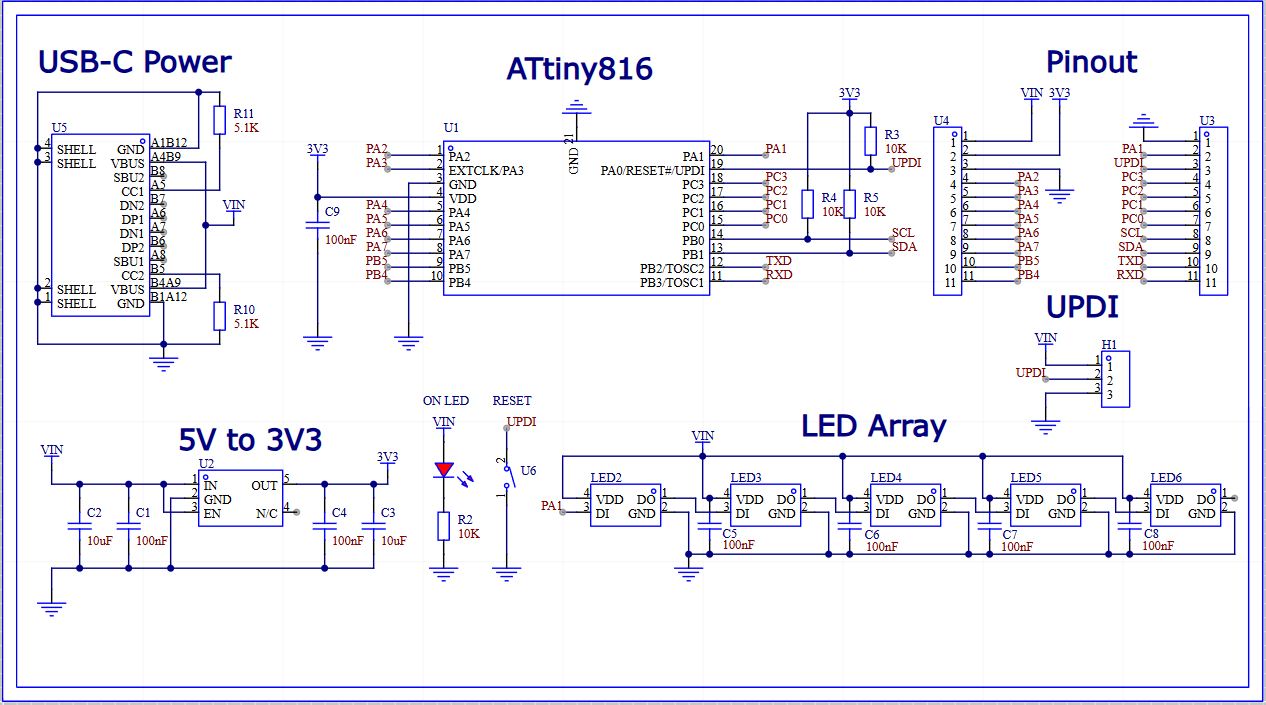
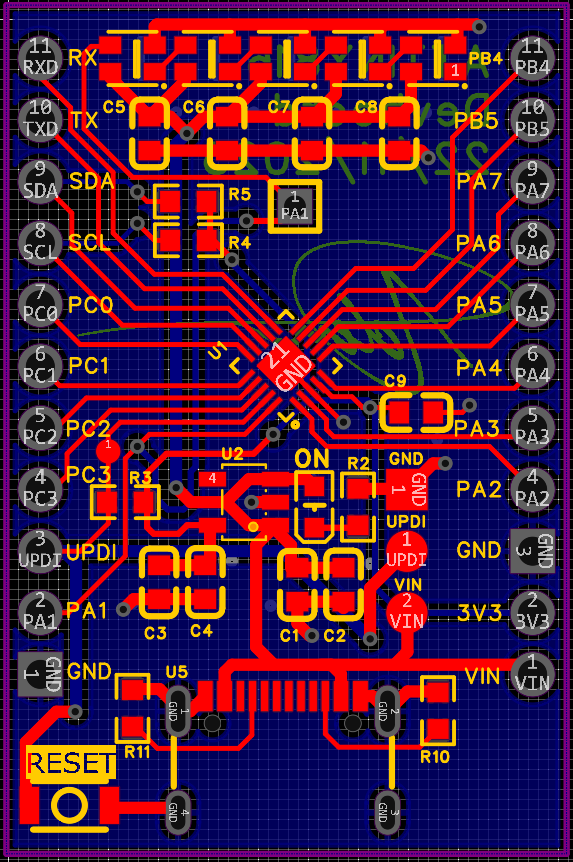
The USB-C only has the function of delivering power as the serial communcation for the ATtiny is UPDI (Unified Program and Debug Interface). Needing only three wires, I used exposed pads so that a simple pogo pin jig could program the chip.
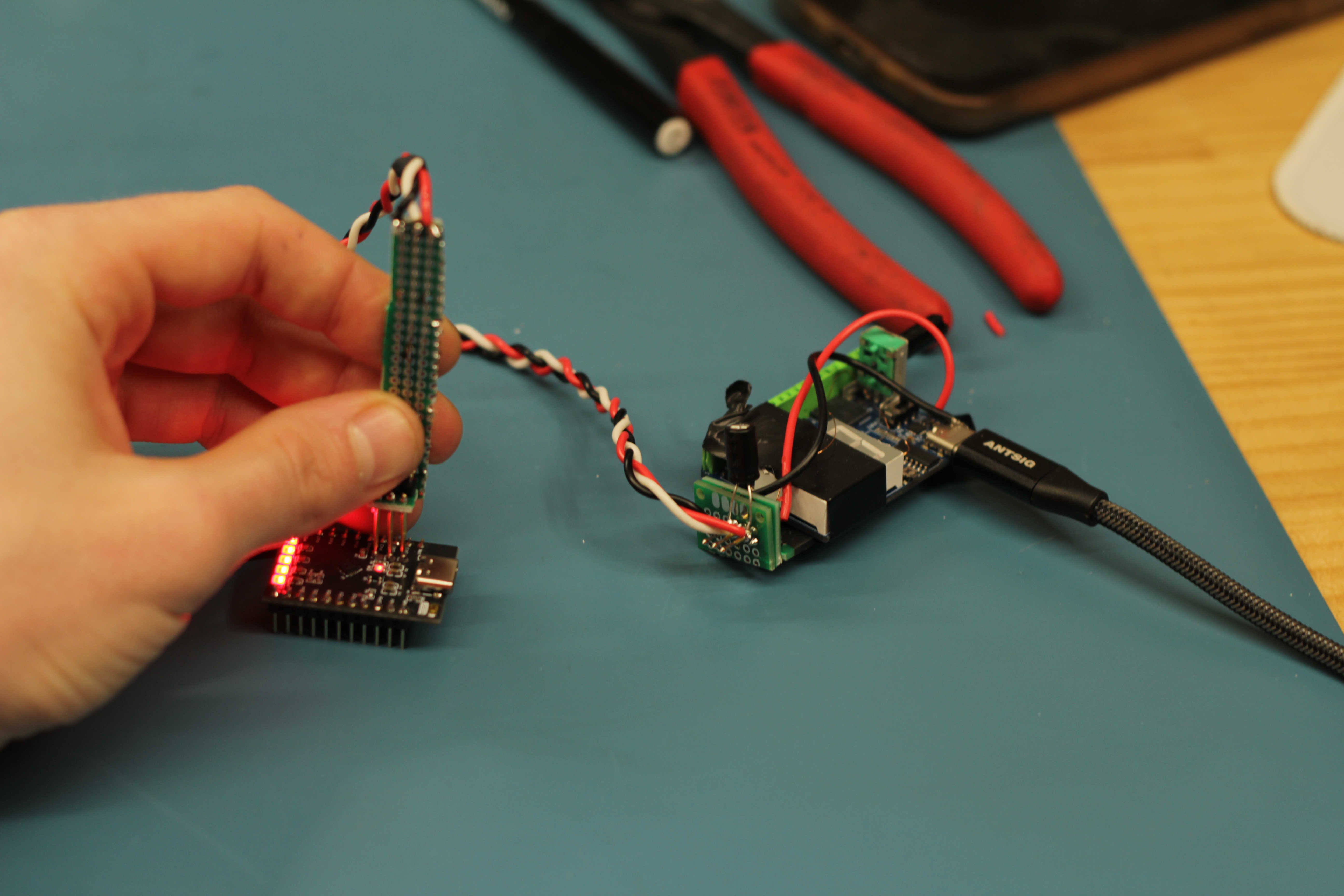
Thankfully I still had my QUTy board from CAB202, otherwise it would have been a couple of days waiting for a UPDI programmer. I was able to Frankenstein the USB to UART chip to a pogo pin stick I made.
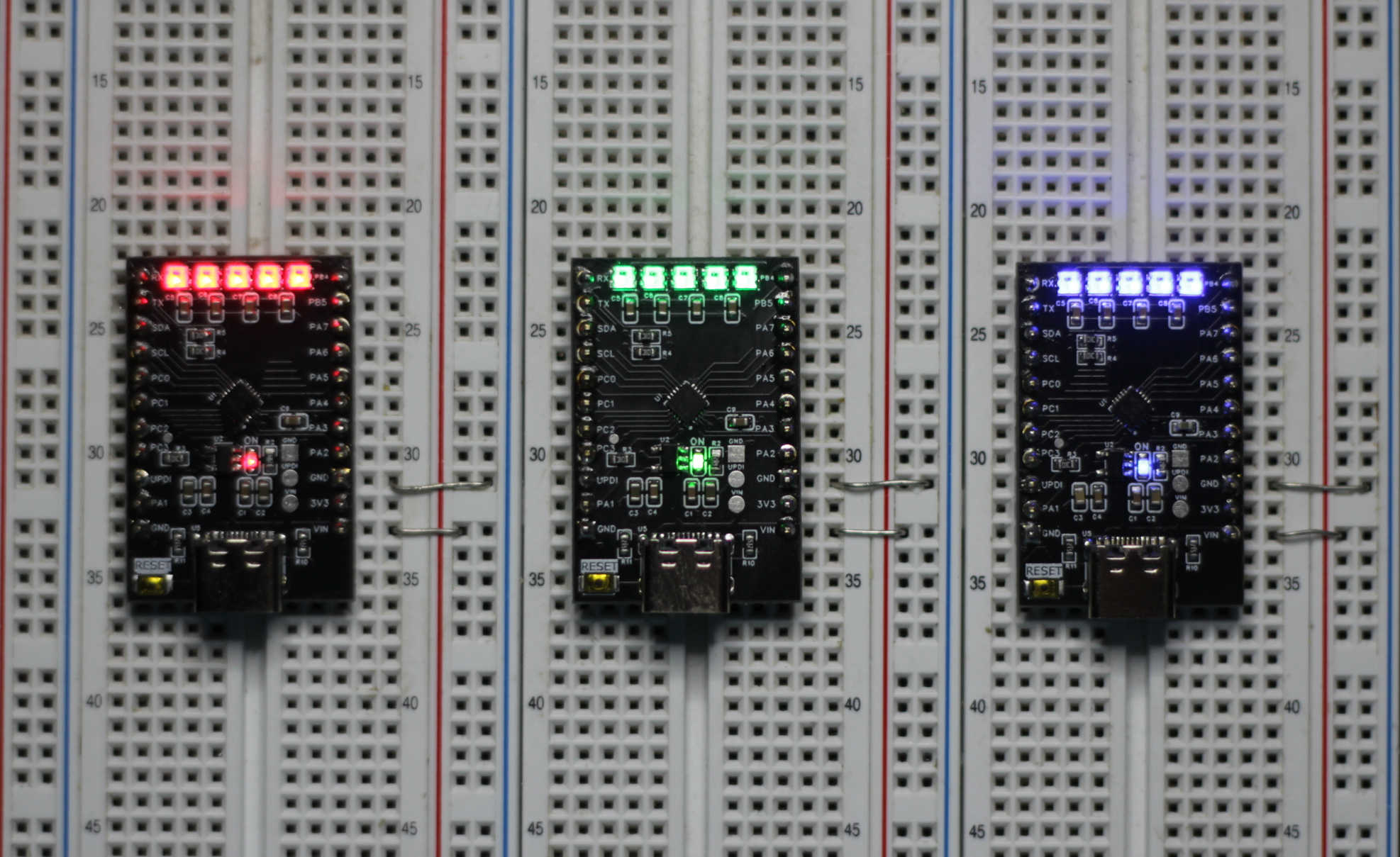
Atmel's ATtiny816 is the perfect microcontroller for an upcoming project that requires components to be as small as possible. QUT's CAB202 (Microproessors and Digital Systems) used a ATtiny1616 in its QUTy board. I had already learnt a decent amount to be able to understand what was going under the hood. With a QFN packaged chip, having a breakout board was essential to prototype it.
The USB-C only has the function of delivering power as the serial communcation for the ATtiny is UPDI (Unified Program and Debug Interface). Needing only three wires, I used exposed pads so that a simple pogo pin jig could program the chip.
Thankfully I still had my QUTy board from CAB202, otherwise it would have been a couple of days waiting for a UPDI programmer. I was able to Frankenstein the USB to UART chip to a pogo pin stick I made.